Luna Bronze’s retail introduction in the U.S. has taken a decade to realize. The Australian self-tanning brand, conceived by co-founder Maddy Balderson after her encounter with skin cancer, was launched in 2015 and has been reconfiguring itself for global growth over the past five years. This February, Luna Bronze embarked on its inaugural significant U.S. retail collaboration with Ulta Beauty, symbolizing an important achievement for the brand in light of the increasing demand for Australia’s body-care innovations.
“There’s undoubtedly a rising global fascination with Australian beauty in general,” Balderson, who resides in Sydney, informs Fashionista. “Australian brands are often linked to natural ingredients, streamlined routines and a heightened awareness of sun safety, which appeals to U.S. consumers.”
Brands like Bondi Sands, Lanolips, and Ultra Violette have already made significant inroads across various sectors in the U.S. market, and the A-beauty sector continues to gain momentum: In 2025, Australian beauty produced $16 million in media impact value (MIV) in the U.S., with projections showing nearly 12% growth to $17.9 million MIV in 2026, based on data from Launchmetrics.
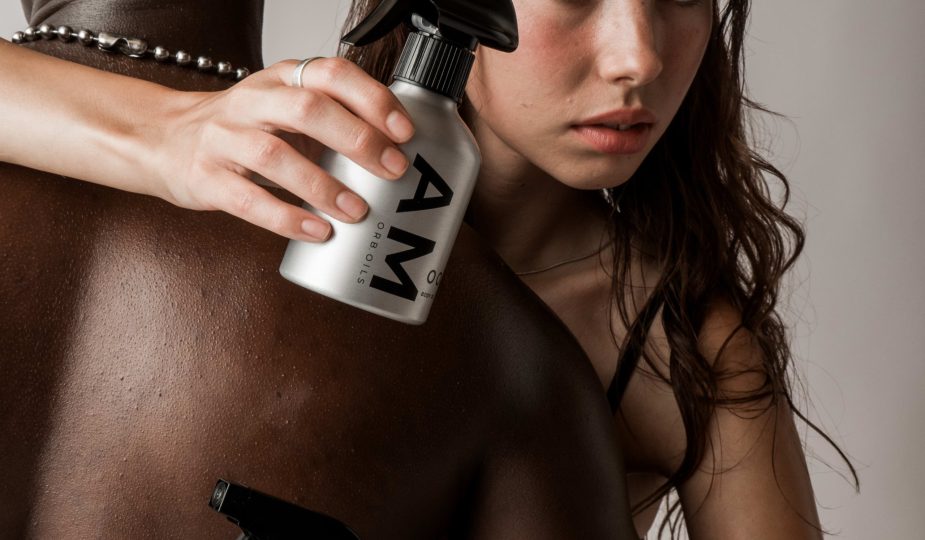
An increasing array of Australian body-care brands are solidifying their presence in U.S. retail. Gem, a personal-care label featuring minimalist pastel-hued packaging, recently debuted in Walmart after cultivating a dedicated following in the U.K. and its native Australia. The self-tanning brand Bali Body achieved its most extensive U.S. retail growth to date in February by launching in roughly 2,900 Walmart stores nationwide, while Orb Oils’ gender-neutral body oils (produced in Melbourne) began entering the U.S. market in the latter part of 2025 through Revolve and Free People.
“We’ve enjoyed an amazing response from our Australian audience since our launch, which has naturally led to an organic expansion into international markets, particularly the U.S.,” states Orb Oils Co-founder Emma Smith. “There appears to be a market gap for our offerings, and we aim to redefine norms not only locally or nationally but globally.”
What is propelling this surge of Australian body-care products in the U.S.? Enhanced by social media’s unrestricted connection to global trends, consumer curiosity in international beauty markets has skyrocketed in recent years. Consider the K-beauty revival sweeping across the nation: Driven by beloved brands like Medicube and Beauty of Joseon, sales of K-beauty in the U.S. spiked to $2 billion in 2025, reflecting a 37% increase year-over-year, according to consumer intelligence firm NIQ. Other global beauty markets, such as J-beauty (Japan), I-beauty (India), and now A-beauty (Australia), are closely following suit as they gain traction among U.S. consumers.
“At Ulta Beauty, our customers are increasingly eager to explore international brands that introduce new methods, ingredients, and rituals into their beauty routines,” shares Ulta Beauty VP of Merchandising Lisa Tamburello. “That’s why we continue to broaden our range of A-beauty brands, which already include long-standing favorites like Loving Tan and Bali Body.”
In addition to America’s fascination with global beauty, Australia’s sun-loving lifestyle particularly resonates with U.S. consumers, as the Land Down Under is often associated with tranquil beaches and naturally bronzed skin (one might think of Jacob Elordi, but preferences vary). As the beauty industry prepares for summer’s sunny return, Australian body-care brands are set to attract U.S. consumers looking to achieve healthy, radiant — and sun-protected! — skin.
“Australia boasts a very intense sun, beach, and outdoor culture, which inherently lends itself to body-care and sun-care advancements,” states Bali Body Founder Laura Osterloo. “Numerous Australian brands are founded on that lifestyle, which appeals strongly to U.S. consumers.” Gem Founder and CEO Georgia Geminder agrees, adding that U.S. buyers are attracted to Australia’s “authenticity,” amplified by the brands’ “effective formulas, quality ingredients, and a relaxed, lifestyle-driven approach to beauty.”
For the Australian brands themselves, breaking into the U.S. symbolizes a significant milestone: “Australia is also a somewhat limited market, so if you’re developing a brand with global aspirations, international expansion quickly becomes part of your journey,” Balderson remarks. For context, Australia’s beauty and personal-care sector is anticipated to generate AU $12.38 billion (approximately $8.48 billion) in 2026, in contrast to the U.S. market’s impressive $106.76 billion. Moving into America’s vast beauty landscape compels Australian brands to focus on product innovation and target a substantially larger consumer audience. As Smith states: “We are merely a small segment of the global market, yet we are well regarded within the beauty industry.”