These are the narratives capturing attention in fashion this Monday.
### World Cup Halftime Fashion
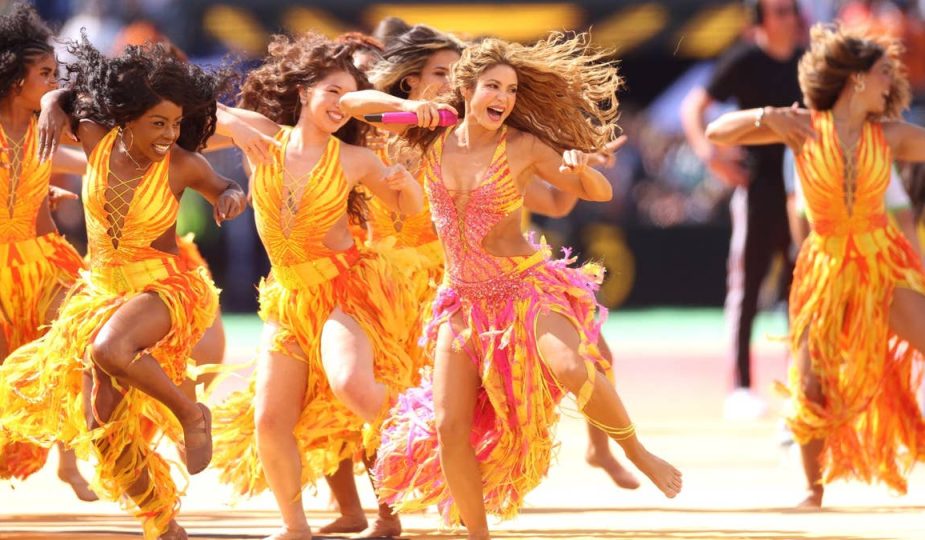
The inaugural halftime spectacle of the FIFA World Cup featured over 350 performers, encompassing a variety of styles and genres. Madonna commenced the show in a Saint Laurent corset along with a crystal-adorned Teddy jacket. BTS dazzled in soccer-themed outfits of red, white, and black, while Justin Bieber showcased a custom Skylrk ensemble complemented by $19,795 diamond earrings. Shakira concluded the performance wearing a Roberto Cavalli by Fausto Puglisi bodysuit intricately hand-embroidered with over 200,000 crystals, paired with Gold Swarovski Hyperbola sunglasses. {WWD/paywalled}
### Reformation Targets $1B IPO Valuation
Reformation is targeting a valuation nearing $1 billion as it prepares for its debut on the U.S. stock market. The brand aims to raise up to $239.1 million by offering 14.1 million shares priced between $15 and $17. Reformation’s stock will be traded on the New York Stock Exchange under the ticker “REF,” with J.P. Morgan, Morgan Stanley, Citigroup, and RBC Capital Markets managing the offering. {Business of Fashion/paywalled}
### QVC’s Bankruptcy Situation Nears Conclusion
A federal bankruptcy court in Texas has approved QVC Group’s debt restructuring strategy, enabling the company to emerge from Chapter 11, reducing its debt from approximately $6.6 billion to $1.3 billion, while ensuring vendors receive full payments or have their claims restored. Company executives indicate that the reduced financial burden will enable QVC to concentrate on live social commerce, an area it’s broadening with initiatives such as a 24/7 TikTok Shop channel. Following its exit from bankruptcy, QVC anticipates securing a $600 million credit facility and being listed on a major stock exchange under the ticker “QVCG.” {Retail Dive}
### USMCA Review Sparks Doubts for Fashion Supply Chains
The initial mandatory review of the USMCA has concluded without Washington, D.C. reaffirming the trade agreement, creating uncertainty within the fashion sector regarding a region previously considered a reliable alternative to Chinese sourcing. According to the deal’s “yarn-forward” rules of origin, garments generally need to utilize North American yarn and fabric to qualify for duty-free status, and the count of significant U.S. fashion companies sourcing from Mexico has significantly declined amidst this ambiguity. Industry organizations, while relieved that the agreement remains intact, caution that unanswered questions about the review schedule and the pact’s trilateral status are already hindering new investments. Trade analysts predict targeted modifications rather than a comprehensive revision, with origin rules likely being a major focus during negotiations, especially concerning textiles and apparel. {Vogue Business/paywalled}
*Do you have an up-and-coming brand you wish to highlight for Fashionista readers? Kickstart your venture with our cost-effective digital solutions.*