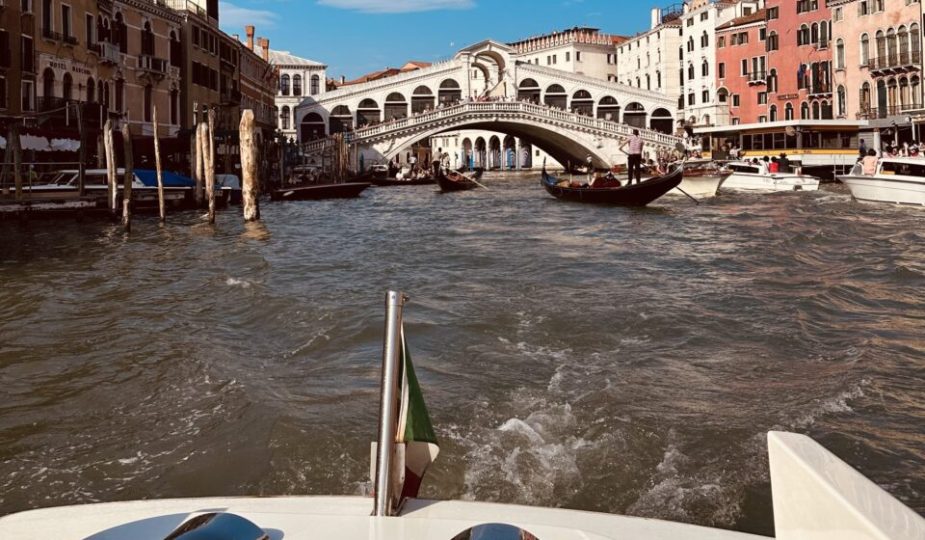
My initial journey took place in September of the previous year; it was intended to be a multi-city road trip through Florence, Rome, and Venice. However, due to the challenges of the drive, we opted for just one destination, and Venezia emerged as the victor—my long-cherished dream locale. Interestingly, I strayed from my usual planning habits and did not meticulously consider the details of my trip. Fortunately, I received recommendations for a few dining spots and foolishly—or so it seemed at the moment—chose the Luna Baglioni hotel, disregarding my instincts and the advice of multiple friends. Now, I won’t completely criticize the establishment; it wasn’t terrible, but upon our arrival, they actually struggled to locate our reservation for a good half an hour, which, as you can imagine, felt exasperating given the long journey we’d taken (road trip, just a reminder) and the numerous email exchanges I had already had with the front desk about our stay and plans. After what felt like ages, they eventually found our rooms, which we were compelled to upgrade because the junior suite I had reserved turned out to be a rather spacious room with a minuscule bathroom lacking any view of the city or canal, despite the hotel being (in my view) ideally located at the grand canal’s edge and merely five steps from St. Mark’s Square. That said, the view left much to be desired. Naturally, I went downstairs to negotiate an upgrade, and I secured one, albeit at an additional cost. There’s no denying that the upgraded suite was stunning, although it was quite aged like the rest of Venice. Our suite was labeled the ‘Sansovino lagoon view suite’ and featured a massive terrace with a lovely rooftop panorama of the canal. It was somewhat disappointing and unexpected that the view didn’t face directly onto the canal; nevertheless, the interior was appealing, with Renaissance-style finishes that lent it a bright ambiance, contrasting with the oppressive styles often found in most Venetian residences. Still, worrying about your room in Venice should be the last concern, as you’re unlikely to spend much time there. Once we settled in and unpacked, we hurried out and it felt as if we didn’t return until our departure day, which came up quicker than anticipated.
As a newcomer to Venice, I assumed I would need about five days to explore the city; thankfully, my sister advised me at the last moment to shorten our stay to just four days—turns out, even that was perhaps excessive…
On our first night, filled with excitement and eager to experience every tourist attraction this city had to offer, I naturally booked a gondola ride to dinner, and not just any dinner— it had to be THE restaurant—Da Ivo.
The oldest and most renowned dining venue in Venice, accessible, of course, via the notorious Venetian gondolas, smoothly navigating through the smelly, rat-infested canals. We didn’t actually encounter any rats, but that’s the story. When exploring new areas, I lean towards local cuisine, as it provides a deeper understanding of a foreign culture. Despite the beef carpaccio’s origin in Venice by Signor Cipriani, the local food reflects the city’s geography. Venetians prefer seafood, alongside squid ink pasta and risotto, sardines, and shellfish dishes such as spaghetti alle vongole, which, while not originally from Venice, is still highly regarded. Among other widely available classic Italian dishes is liver, celebrated as one of their delicacies, historically reserved for the Venetian elite. Though I would usually relish a seafood platter and squid ink pasta with clams was a childhood favorite, the aromas of Venice dissuaded me from consuming anything aquatic, so I opted for the less traditional but genuinely fantastic selections the Italians generously present: stuffed zucchini flowers, beef carpaccio, and truffle pasta, all courtesy of the impeccable cucina at Da Ivo. This was our first and most incredible dining experience in Venice, and little did we know it would also turn out to be our final exceptional one.
Upon exiting the restaurant, we discovered that the city was essentially a labyrinth—less than ideal for anyone with claustrophobia. Finding our way was extremely challenging, but thankfully it was quite late, and the streets were deserted, as even someone without the slightest tendency towards claustrophobia could feel the oppressive sensation of being trapped in a maze. This feeling only intensified the following day during a city walking tour with a guide—in the sweltering heat, the maze felt even more constricting, and I sensed that with every